
The SBTi’s validation of the Petit Forestier Group’s decarbonisation targets
A scientifically proven ambition to move forward with confidence
The most credible framework for staying on course
The SBTi is particularly recognised for its international and objective approach, as it is science-based. Aligned with the Paris Agreement, its aim is to limit global warming by setting a clear course for emissions reductions. Unlike other labels, it is not based on arbitrary commitments, but on a scientifically validated methodology. SBTi aims to help companies set robust reduction targets compatible with limiting global temperature rise to 1.5°C.
For a major player in refrigeration and cold storage rental, adopting SBTi means transforming its annual carbon footprint into a genuine long-term vision.
The Science Based Targets initiative operates by categorising greenhouse gas emissions into three ‘scopes’:
- Scope 1: Direct emissions related to operations, such as our own vehicle fleet and refrigerants.
- Scope 2: Indirect emissions linked to energy consumption, mainly electricity used in buildings and district heating networks.
- Scope 3: Indirect emissions across the entire value chain (customer use of equipment, procurement, waste management, etc.)
The Group’s short-term commitments up to 2032
The decarbonisation pathway validated by the SBTi sets ambitious targets for the coming years. For the Petit Forestier Group, these targets are not merely figures; they represent our roadmap to sustainable growth. The question is no longer whether we should change, but how to do so in a responsible and realistic manner. This roadmap, which we have designed to be both ambitious and sincere, provides us with a clear direction between now and 2032 to gradually transform our business operations.
For Scopes 1 and 2, the target is to reduce GHG emissions by 53% compared to the 2022 baseline year. This ambition is based on four pillars of action:
- Replace refrigerants with lower-emission alternatives
- Electrify our internal fleet of vehicles
- Increase the use of solar power at our sites.
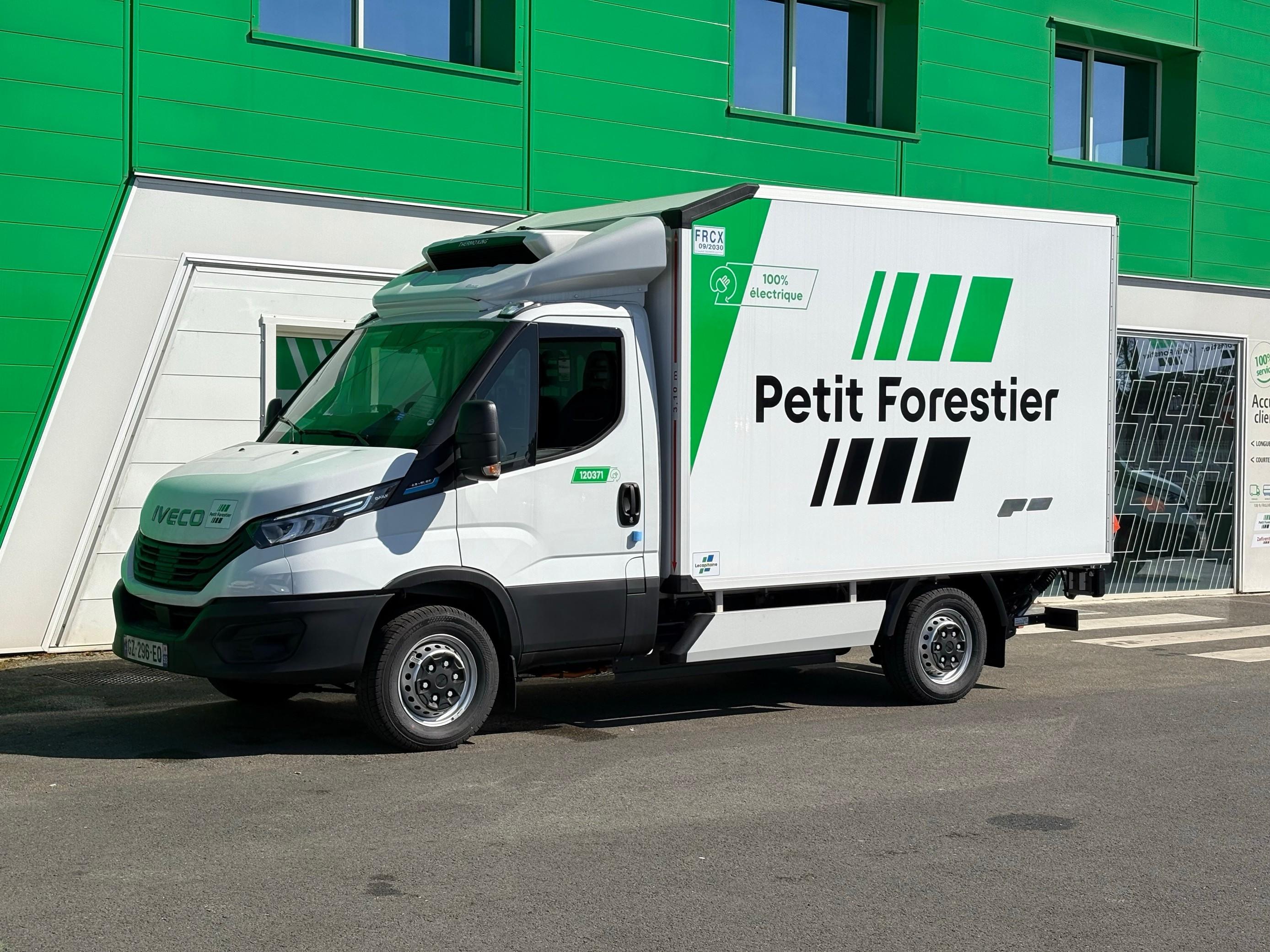
Scope 3 emissions, which account for the largest share of emissions in the transport sector, are also the subject of a specific commitment. The target is a 58% reduction in emissions per euro value added by 2032. This approach is essential to support the Group’s growth while reducing its carbon intensity. In other words, the business can continue to grow but with increasingly low-emission vehicles and equipment:
Here are the main Scope 3 actions:
- Decarbonising powertrains by transitioning customer-leased vehicles to electric, HVO and B100 only
- Improving chassis efficiency
- Supporting customers in optimising vehicle usage
- Improving bodywork efficiency
A story driven by committed people
15 years of practical action
The SBTi initiative is not a starting point. It builds on a committed approach that began over 15 years ago. An approach developed step by step, with pragmatism and conviction:
- 2010: Launch of the first electric vehicle in the fleet
- 2018: Creation of a dedicated CSR Department to structure the initiative at the highest level of the organisation
- 2021: Completion of the first comprehensive carbon footprint assessment covering all three scopes
- 2022: Signing up to the United Nations Global Compact
- 2025: The Group surpasses the 1,000-vehicle mark for electric vehicles in its fleet and submits its trajectory to the SBTi
Already today, 100% of new vehicles joining the fleet are compatible with biofuels. These are concrete, visible steps that reflect our long-term commitment.
A roadmap co-built with all business units
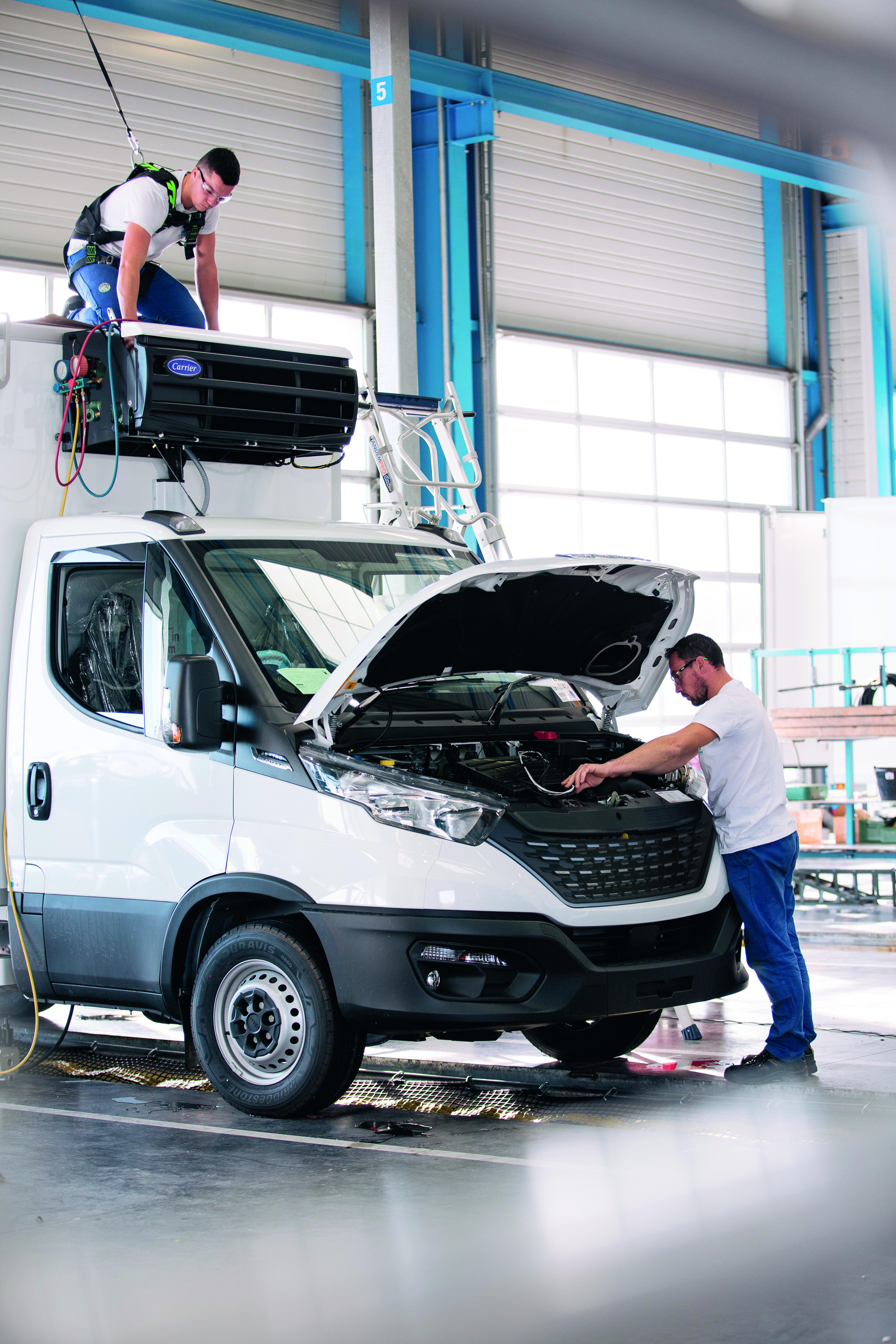
This decarbonisation roadmap is the result of a collective effort involving all of the Group’s business lines. We have organised workshops with our CSR teams, our technicians and our operations staff to ensure that the actions identified come from those who carry out the work on a day-to-day basis. Because the best solutions often come from the front line.
This collaborative process has enabled us to define specific actions for each area of expertise:
- Industrial expertise: our design office and our in-house bodywork specialist Lecapitaine, part of the industrial division, are at the heart of innovation. They have developed the URBAN body, an exclusive model that saves up to 12% in energy per vehicle. They are also working on improving the efficiency of chassis and refrigeration units to reduce their carbon footprint.
- Asset connectivity: through the data collected, we enhance preventive maintenance, extend asset lifespan, and strengthen our ESG commitment by reducing resource waste.
- Static refrigeration: Refrigerated display cabinets are now enclosed and fitted with LED lighting. They are powered by green gas and help to reduce energy consumption.
- Branches and maintenance: the Group has already trained over 1,300 employees in its sustainable development objectives. Branch technicians are specifically trained in the maintenance of electric powertrains.
- Customers: sales staff use decision-making tools such as the TCO (Total Cost of Ownership) simulator to guide customers towards lower-emission fleets.
- Life cycle management: through its subsidiary Reways, the Group promotes the reuse of spare parts, thereby reducing the carbon footprint associated with the manufacture of new components.
Rigour, transparency and shared ambition
Validation by the Science Based Targets initiative (SBTi) ensures the rigour and transparency of the Group’s decarbonisation pathway. It serves as a mark of confidence for our customers, partners and employees. This approach is fully aligned with Léonard FORESTIER our CEO’s ambition: “To become the global leader in sustainable cold chain logistics, while playing a key role in driving the transition towards a more responsible future!”
Climate & Environment
We are committed to reducing our carbon footprint: we actively implement more sustainable practices across the Group while supporting our clients in their energy transition.
2025 Sustainability Report
Discover our tangible progress on our key priorities.
Decarbonization, energy transition and responsible resource management: let’s take action together.
Refrigerant fluid recycling
Since 2018, we have been committed to end-of-life vehicle (ELV) recycling through our Reways brand, as part of our commitment to sustainability and the circular economy.